The Beginning of Commercial Tea Cultivation
During the early 1800s, the British East India Company became increasingly interested in growing tea in India. Britain had been heavily dependent on tea imported from China, and developing tea cultivation in India offered an opportunity to establish a more reliable supply.
In the 1830s, experiments with tea cultivation began in Assam. The indigenous Assam tea plant, Camellia sinensis var. assamica, proved particularly well suited to the region's warm, humid climate.
The first commercial tea gardens began developing in Assam during the 1830s, marking an important turning point in the history of Indian tea.
The Rise of Assam Tea
Assam soon became one of India's major tea-producing regions. Its hot climate, abundant rainfall and fertile plains created ideal conditions for tea cultivation.
Assam tea became known for its strong flavour, rich colour and distinctive aroma. It also became an important ingredient in many blends of traditional Indian chai.
Today, Assam remains one of the world's best-known tea-growing regions.
The Birth of Darjeeling Tea
While Assam was developing as a major tea-producing region, tea cultivation was also expanding in the Himalayan foothills.
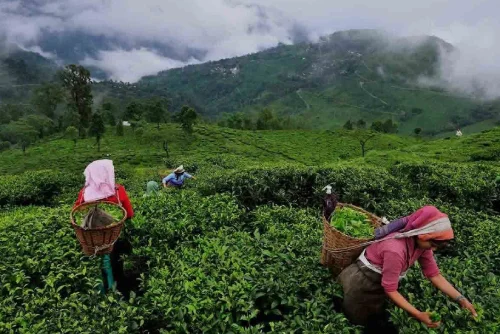
In the mid-19th century, tea plantations were established around Darjeeling in present-day West Bengal. The region's high altitude, cool climate, misty conditions and mountainous terrain created a completely different environment from Assam.
Darjeeling tea developed its own distinctive character, often described as delicate, aromatic and complex. It eventually earned the reputation of being one of the finest teas in the world.
Darjeeling is sometimes called the "Champagne of Teas" because of its distinctive quality and character.
Tea Cultivation Spreads Across India
As the tea industry grew, cultivation expanded beyond Assam and Darjeeling.
Tea plantations were established in several parts of India, including:
- Assam for bold and malty teas
- Darjeeling for aromatic and delicate teas
- Nilgiri for fragrant teas from southern India
- Dooars and Terai for distinctive teas from northern West Bengal
- Kangra for teas grown in the Himalayan region
Each region developed its own growing conditions, cultivation practices and flavour profiles.
Tea and the Growth of Indian Chai
Tea initially became popular in India largely through commercial promotion during the colonial period. Over time, however, Indians developed their own ways of preparing and enjoying tea.
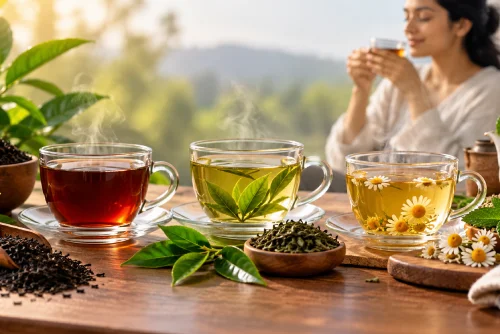
The familiar Indian chai evolved as tea was combined with ingredients such as milk, sugar, ginger, cardamom, cloves and other spices.
Today, chai is deeply connected with everyday Indian life. A cup of tea can be part of a morning routine, a workplace break, a family gathering or a conversation between friends.
India's Tea Industry After Independence
After India gained independence in 1947, the country's tea industry continued to grow.
Tea became an important agricultural and export commodity, supporting millions of people involved in cultivation, processing, transportation and trade.
The Tea Board of India, established in 1953, played an important role in supporting and developing India's tea industry.
Indian tea gradually built a strong reputation in international markets, with Assam, Darjeeling and Nilgiri becoming recognised names among tea lovers around the world.
Indian Tea Today
India remains one of the world's leading tea-producing nations. Indian teas are enjoyed domestically as well as exported to markets around the globe.
Modern tea production combines traditional knowledge with advances in cultivation, processing, quality control and sustainability.
At the same time, interest in speciality teas, organic cultivation, single-estate teas and traditional brewing methods continues to grow.
Why Indian Tea Is So Special
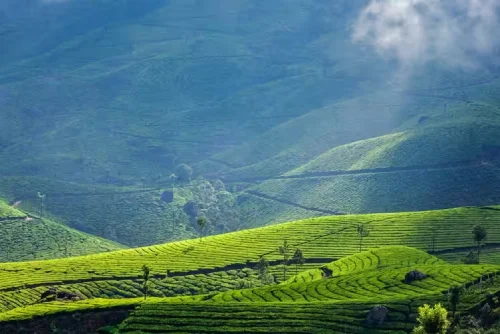
India's tea heritage is shaped by its incredible geographical diversity. From the humid plains of Assam to the misty hills of Darjeeling and the mountains of Nilgiri, different climates and landscapes produce teas with distinct characteristics.
This diversity is one of the reasons Indian tea has such a strong identity in the global tea industry.
A Journey from Leaf to Legacy
The history of tea in India is a story of indigenous plants, changing agricultural practices, colonial-era commercialisation, regional craftsmanship and evolving Indian traditions.
What began as a crop cultivated on a commercial scale in the 19th century eventually became deeply woven into Indian culture.
Today, when we enjoy a cup of Assam tea, Darjeeling tea or masala chai, we are experiencing a small part of a history that has developed over generations.
From the tea gardens of Assam to the hills of Darjeeling, India's tea story continues to be brewed one cup at a time.